_edited_edited.png)
Boraginaceae / Hydrophyllum alpestre / Alpine Waterleaf
- Oct 23, 2025
- 2 min read

Where’s the flowers?! One of the few herbs in our Sierra Nevada woodlands that, despite their beautiful and lovely-scented floral parts, are often first recognized by their foliage. A perennial herb native to the Western United States, this plant has the unique characteristic of stationing it’s flowers amidst the soil beneath it’s leaves.
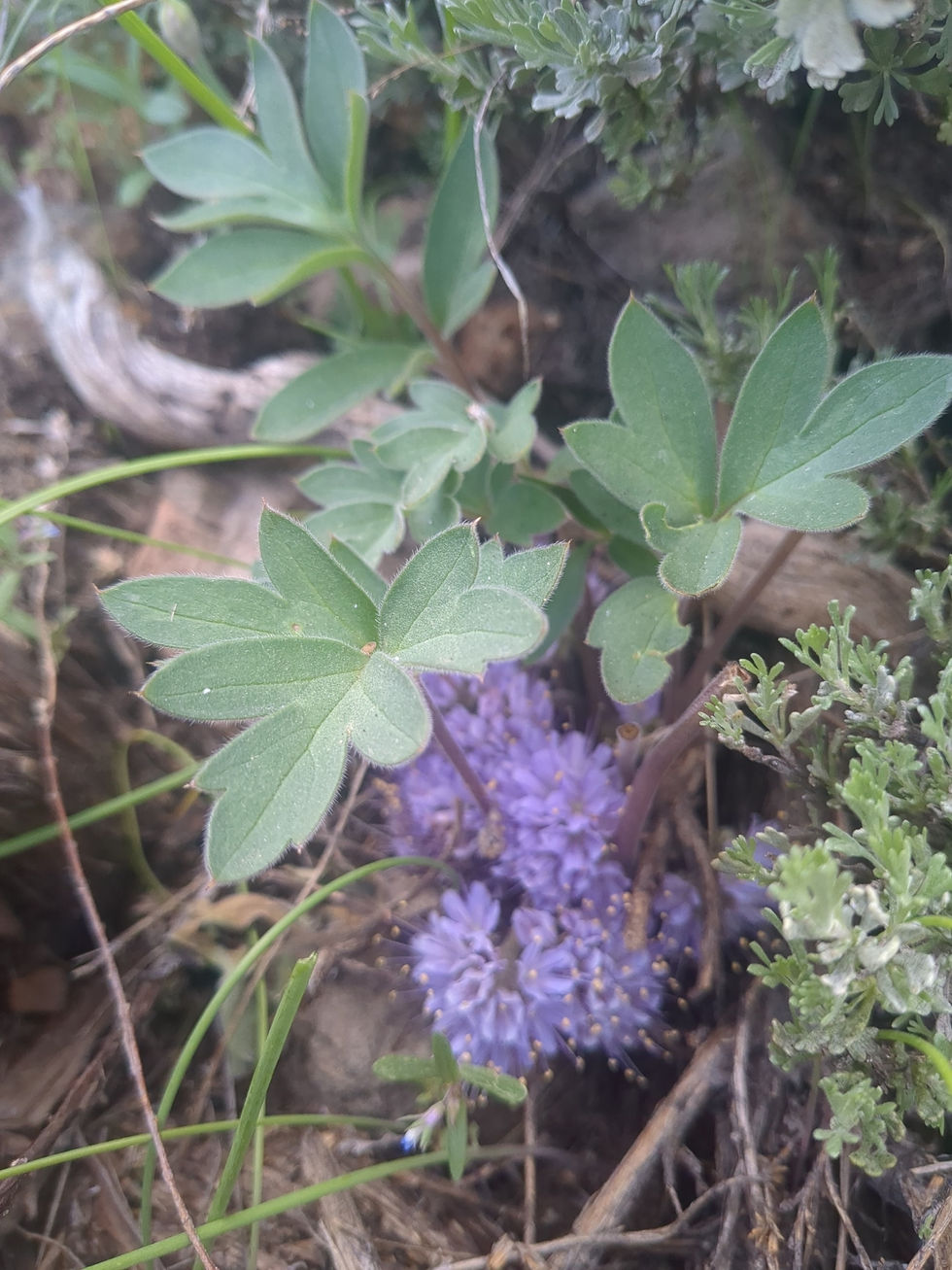
So, beginning there, on H. alpestre we find a densely hairy globose cyme. It’s flowers are bell-shaped, often occurring in shades of purple but can also range from blue to nearly white. There is a reduced or essentially non-existent stem for each cyme, accounting for it’s low stature. The flowers are in bloom typically from May to July depending on elevation. They often enjoy shade in our more arid climate east of the crest but we’ve found them in full sun in more moist conditions.
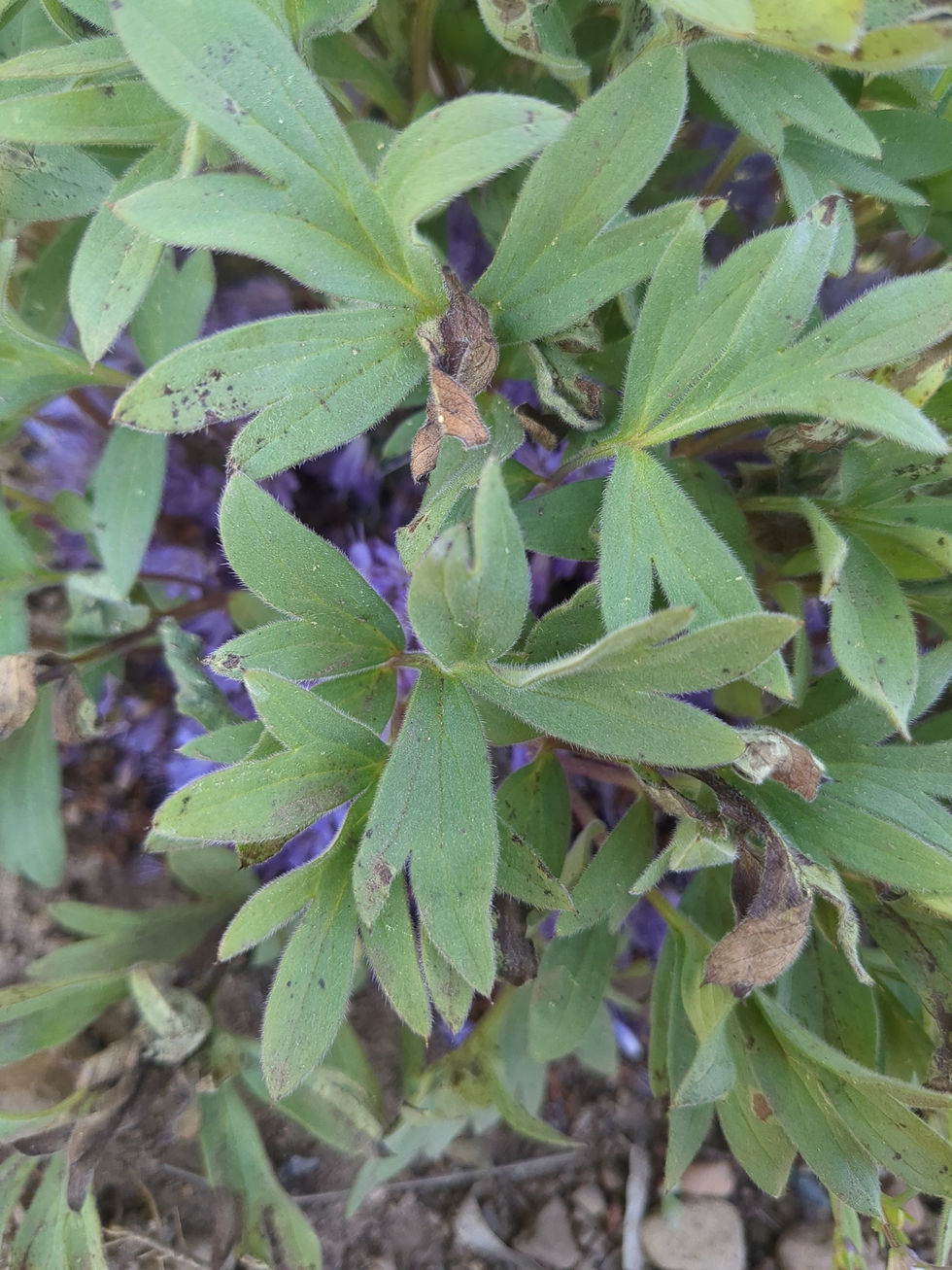
The pinnately lobed leaves arise from their rhizomes and are positioned atop a reddish petiole. Like the other parts, these are also quite hairy in their presentation. Fruits follow this theme though sometimes become glabrous in age, eventually giving way to brownish seeds.
While a variety of pollinators assist (including bees, flies and even hummingbirds!), all Hydrophyllum species are capable of self-fertilization.

The species name of alpestre comes from the latin alpestris meaning something that is growing nearly in the alpine. It also holds the secondary meaning of land that is simply higher than the surrounding areas. Hydrophyllum on the other hand, comes from the Greek and translates to Waterleaf, where we also derive it’s common name. One of the few times where the common name (Alpine Waterleaf) is a nearly exact match to the binomial.

All parts of the plant are used traditionally as food. Flowers are sweet and accompany dishes as an edible, tasty garnish. Tender meristematic leaves and stems are harvested as greens and utilized both raw and cooked. Some also boil or steam the large and fleshy rhizomes.


Comments